

Northern Ireland risks becoming used to abnormal politics, says Bryant
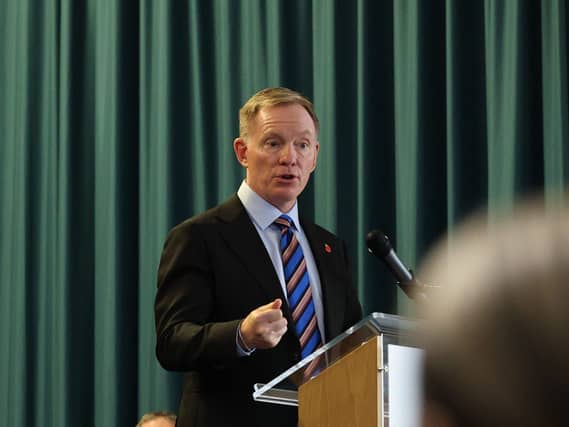

Under the powersharing structures, the largest nationalist and unionist parties both have the ability to effectively collapse the ruling executive.
Northern Ireland is in danger of becoming used to the “abnormality” of its political system, Sir Chris Bryant warned as he signalled a desire to reform Stormont’s governance structures.
The Northern Ireland Secretary said the region was stuck in a “constant process” of parties threatening to collapse the institutions if they don’t get what they want.
Under the powersharing structures, the largest nationalist party and largest unionist party at Stormont both have the ability to effectively collapse the ruling executive if it withdraws from the institutions. Both the DUP and Sinn Féin have exercised that power in the last 10 years.
The fall-out from the recent Drumcree parading dispute has prompted speculation the DUP might do so again in protest at Sinn Féin First Minister Michelle O’Neill being investigated by police for her participation in an allegedly unlawful protest on the Garvaghy Road in Portadown against a planned Orange Order parade.
The events of Drumcree have played out at a time when Stormont ministers have still not set a budget for the current financial year because of a dispute with the UK Government over the level of funding offered to the region by the Treasury.
Speaking to reporters at a PSNI passing out ceremony in Belfast on Friday, Sir Chris was asked whether he was willing to push forward with reforms to remove the contentious veto power and, if so, was he prepared to move without the support of the local parties.
The Labour Cabinet minister said it was a “patent nonsense” that public service organisations, such as the police, still did not know what their budget was going to be.
“Ever since I started in this job, I’ve been talking about some elements of reform because you can’t have this constant process of is it going to collapse next week or the week after if one party or another party doesn’t get what it wants,” he said.
“So I’ve been looking at elements of those kind of reforms that we need to put in place.
“I also worry that there’s not much fiscal accountability. So it is the legal responsibility of the Executive to set a budget. But if they don’t set a budget, nothing happens. It’s just that people don’t end up getting the budget, including the PSNI, that they need.
“That is clearly a patent nonsense. And you could say the same across the NHS, on education and so on.
“I also think that we need to look at political accountability and whether we’ve got the right measures in place to make sure that there is political accountability, because otherwise there’s a danger that we just get so used to the abnormality in the way we do our politics here that we stymie the opportunity of economic growth.
“I look at recent figures in Northern Ireland – we’ve had better economic growth over the last few years than any other part in the UK.
“I want to build on that. I want to have an investment summit that actually delivers more investment into Northern Ireland. I want to sort out how we can get the National Wealth Fund and the British Business Bank and so on investing in Northern Ireland as well.
“I can’t do any of that unless we get some of these basics sorted.”
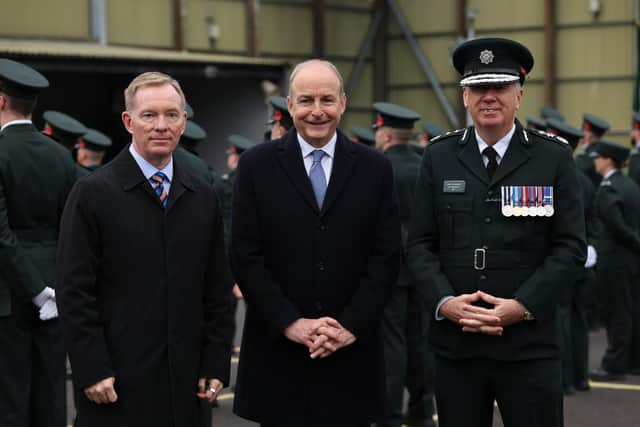
Taoiseach Micheál Martin was also asked about the issue as he attended the event along with Sir Chris. He said it was time for “serious discussions” on reform with all the Stormont parties, supported by the UK and Irish governments.
“The more fundamental point I would say is that in the aftermath of an Assembly election, for example, there should be no one having a veto over whether the Assembly convenes or not, and it should be enabled to convene and a speaker appointed, I think that’s the least the people deserve,” he said.
“And then I do think we have to look at that whole framework governing what was put in, sensibly, 25 years ago, because it was a different situation in terms of the capacity of one party or another to bring the Assembly down, bring the Executive down, or even to form an Executive.
“Because if you look over the 25 years, there simply have been too many times when the Executive has not been in situ, when the Assembly has not been in situ, and I think when we look at all the research, the public want an Assembly, they want an Executive, but they want them to work effectively for them, and I think enabling politics to work in Northern Ireland is a core issue in the here and now.”