

Lawyers tell justice minister: We’ll give you ideas until you choke on them
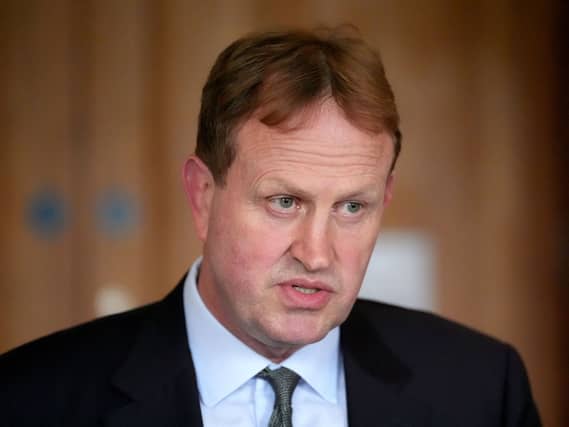

Striking solicitors said they had no shortage of ideas for reform amid the ongoing Legal Aid row.
The Department of Justice has not provided the Law Society with data to back up the effectiveness of its reforms, a committee has been told.
The dispute over District Court criminal legal aid arose when Justice Minister Jim O’Callaghan replaced a per-appearance fee with a flat rate in July, prompting hundreds of solicitors to withdraw their services.
Striking solicitors have said they are open to reforms but have rejected the flat fee model, which the minister said equates to the average of fee appearances under the old system.
Solicitor Michael Finucane told the Justice Committee on Tuesday: “If he wants reforms, if he wants things that will really make a difference – we’ll give him ideas ’til he’s choking on them.
“We will not give him an idea that is a flat fee, no exceptions, no considerations, no allowances, no room for manoeuvre, because that’s not the criminal justice system.”
Mr Finucane earlier told the committee that the minister’s approach to the dispute has “led to hostility and resentment” from his fellow solicitors.
He added: “It didn’t have to be that way. A considered approach with real engagement and discussion could have avoided the need for any of the disruption we have seen, and the profession looks forward to the minister behaving in that way.”
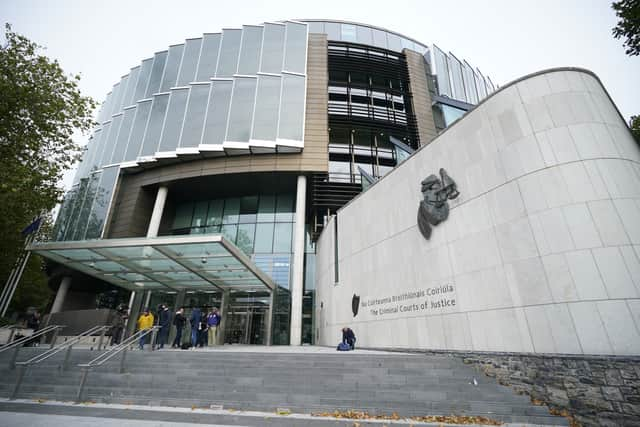
Law Society president Rosemarie Loftus told the committee that there had been a 86% reduction in the issuing of criminal legal aid certificates from 2,868 in August 2025 to 395 this year.
Mr O’Callaghan points to the issuing of more than 1,400 certificates since the revised scheme came into effect as evidence the courts are running effectively.
He said more than a quarter of the cases where certificates were granted have already been disposed, with more than 75% of those concluding in a single court appearance, attracting the full new fee of 520 euro for that appearance.
He said 99% concluded within five appearances, adding that early indications suggest the system is achieving one of its objectives.
However, striking solicitor Tony Collier dismissed the figures as unreliable.
“We don’t see the level of take-up that the minister is stating.”
Mr Collier said the statistics “cannot be trusted” because legal aid certificates are normally issued on the application of a solicitor on behalf of an accused person, but judges are now issuing certificates without such applications in order to meet their own constitutional obligations.
“That legal aid certificate has no effect. You know, it’s a zombie legal aid certificate.”
The vice chair of the Law Society’s criminal law committee said it had not seen the data behind Mr O’Callaghan’s assertions despite requesting it.
Amanda Connolly said: “The Law Society have asked for it on a number of occasions. They’ve also asked for the data behind the the study that the Department of Justice conducted to come about with the instigation of this system in relation to setting the figure at five appearances.”
Labour justice spokesman Alan Kelly said the dispute was not a “hot” political issue but predicted there will be a “domino impact” when trial courts resume hearing “traumatic cases” in October.
He said this would change the situation “dramatically” and impact people’s lives, adding: “I don’t think that has got to that level yet, but it will.
“And it’s a serious concern that it is going to be allowed, I expect, to get to that level because it has a huge impact on many people’s lives.”
Fianna Fáil senator Anne Rabbitte questioned the solicitors on whether their action was a breach of competition law, where a co-ordinated withdrawal of services by competitors is an object restriction of competition and output intended to support an attempt to fix prices.
However, Mr Collier said solicitors are not compelled to work under the scheme, had withdrawn services on individual bases, and the situation was that the minister had changed an existing legal aid model.
Earlier, committee members told reporters that Mr O’Callaghan did not take up an initiation to attend the hearing.
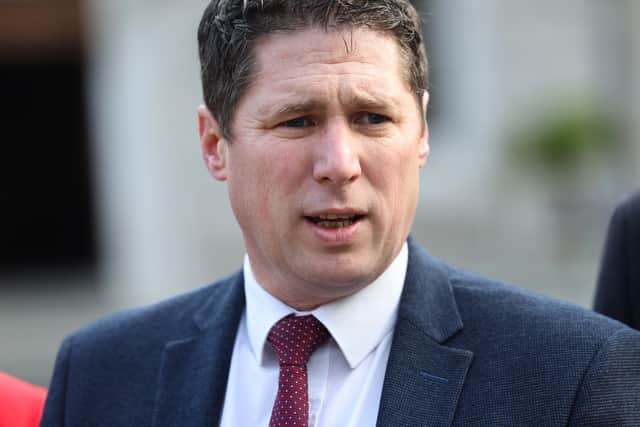
Chairman Matt Carthy accused the minister of an “arrogant” and “pig-headed approach” to the “crisis that has developed within the courts”.
He urged Mr O’Callaghan to come before the committee “as soon as possible”, adding: “Jim O’Callaghan is sitting back while this chaos is unfolding.
“And that is unfair on legal practitioners, unfair on the courts, unfair on people’s right to access to justice – but crucially, from my perspective, it’s unfair on victims.”
The Sinn Féin TD added: “And all of this is an absolute mess, and it’s a mess of Jim O’Callaghan’s making.”
Social Democrats TD Gary Gannon said “people have already been hurt” as a result of delays in the court as he criticised the minister for a “failure and even willingness” to engage in mediation.
Mr O’Callaghan previously dismissed a request for the appointment of an independent mediator, citing that he is awaiting a judicial review judgment in relation to the dispute on October 13.
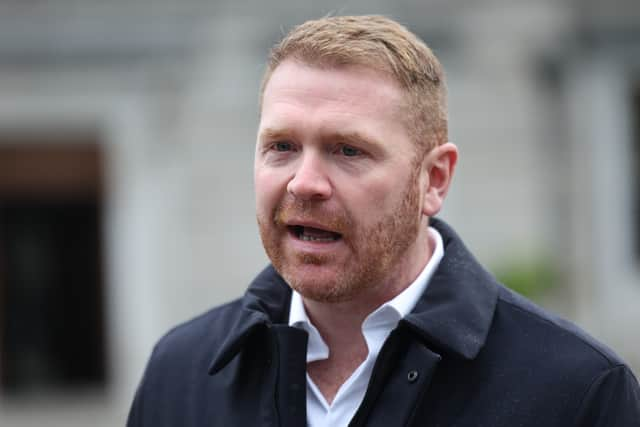
However, Mr Gannon said: “Is there anywhere where it says in legislation at all that you can’t engage in mediation while the judicial review is ongoing?”
He said Mr O’Callaghan “seems to be failing upwards in a way that very few other politicians would be getting away with”.
Mr Gannon said it was “waffle” to suggest the reforms had led to improvements in the court system, as he accused the minister of “spinning” and putting out “half truths”.
He questioned why the minister was focusing on defence solicitors when it came to adjournments, reflecting a position put forward by those striking that delays often originate on the State side.
Mr Gannon said: “An effective politician would have ended this long ago.
“The minister seems to be benefiting from this idea that somehow he’s tough on the legal profession.
“That may help him get his next job, but it makes him poor at doing the job we’ve asked him to do now, which is the justice ministry.”