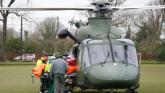
'We have a rule of law in this country' - Army deployed across Ireland amid fuel protests
Search


09 Apr 2026

Please allow ads as they help fund our trusted local news content.
Kindly add us to your ad blocker whitelist.
If you want further access to Ireland's best local journalism, consider contributing and/or subscribing to our free daily Newsletter .
Support our mission and join our community now.
To continue reading this article, you can subscribe for as little as €0.50 per week which will also give you access to all of our premium content and archived articles!
Alternatively, you can pay €0.50 per article, capped at €1 per day.
Thank you for supporting Ireland's best local journalism!


There is “serious concern” over fuel supplies for Irish emergency service vehicles after three days of protests over petrol and diesel costs arising out of the war in the Middle East.
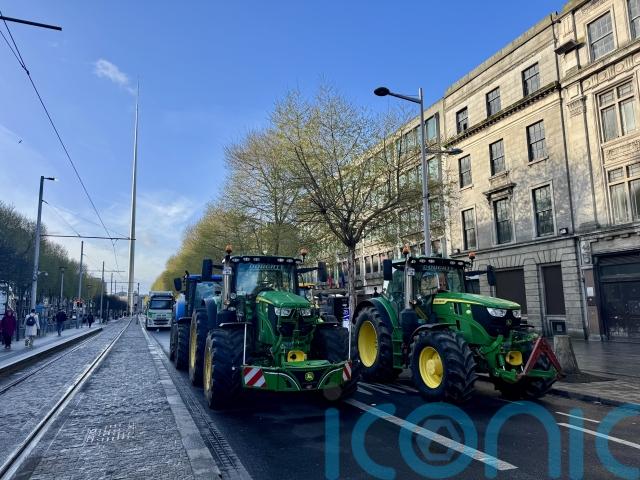
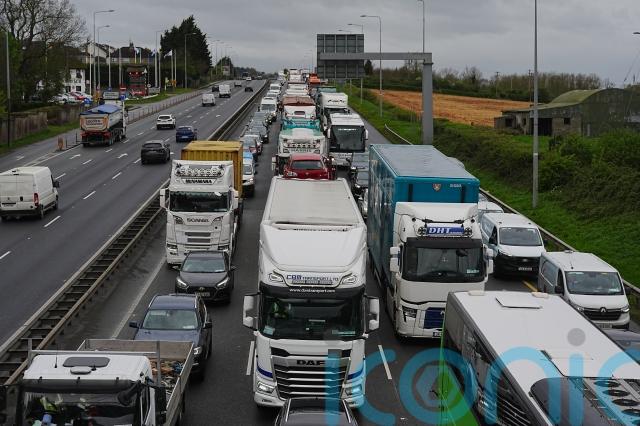
Hauliers and agricultural contractors began protests at various sites around the country on Tuesday by implementing slow-moving convoys on motorways, restricting access to Dublin’s busiest streets and blockading fuel depots that supply half the country.
Participants, many of whom have slept overnight in their vehicles as the demonstration entered a third day on Thursday, say they will continue their action until they receive engagement from Government or are physically removed.
The latter option has become more of a possibility after Irish police formally requested the assistance of the Defence Forces in responding to what Ireland’s premier called an “act of national sabotage”.
The widespread disruption arose out of separate but co-ordinated protests around Ireland’s major cities over demands for further cuts to fuel costs, which have soared as a result of the war in the Middle East and the impact on supplies passing through the Strait of Hormuz.
Just over two weeks ago, Ireland’s ruling coalition signed off on a range of measures to reduce fuel costs, including a temporary excise duty reduction for motor fuels, expansion of the diesel rebate scheme for hauliers and bus operators, and an extension of the fuel allowance.
It saw an effective reduction of 17 cent for petrol, 22 cent for diesel, and five cent for marked gas oil (green diesel) – but the savings were largely eroded as the war waged on.
Protesters have restricted access to a major oil refinery in Whitegate, Co Cork, as well as fuel depots in Galway City and Foynes, Co Limerick.
Other action saw major disruption to traffic around Dublin city as well as a complete blockage of key routes in the capital, including O’Connell Street.
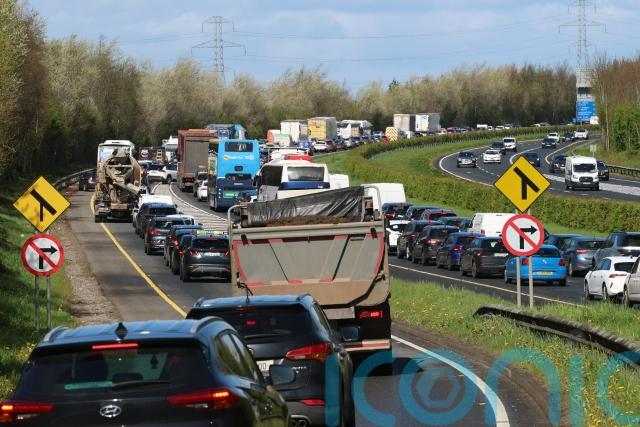
It has raised concern over panic buying at forecourts, some of which have ran out of fuel, as well as impacts on emergency services and deliveries of key supplies for animal welfare on farms.
On Thursday morning, Ireland’s Justice Minister Jim O’Callaghan said the Defence Forces would assist the police service, An Garda Siochana, in removing vehicles from the blockade.
He said: “The blocking of critical national infrastructure will not be permitted to continue and the assistance of the Defence Forces has been requested.”
They military has four heavy-lift recovery trucks to help clear trucks and tractors and it is understood that assistance will be limited to these trucks and the personnel required to operate them.
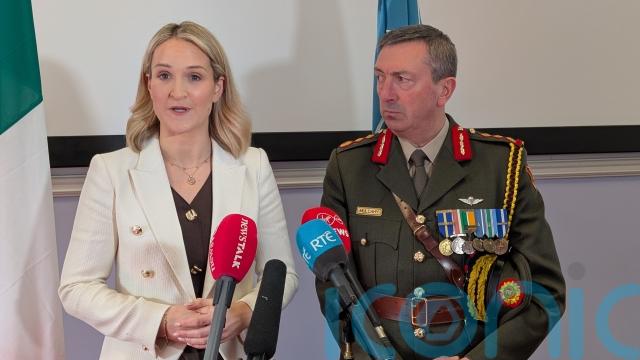
Defence Minister Helen McEntee told reporters at the Curragh Camp that the Defence Forces intervention was “never a first resort”.
However, she said: “It cannot be the case that individuals decide that they are going to blockade parts of the country and stop people from going about their business.”
In a statement to the media at Garda headquarters in Dublin, Deputy Commissioner Shawna Coxon said gardai are “moving to an enforcement phase” unless protesters “desist and disperse”.
She added: “An Garda Siochana is advising protesters to immediately cease blockades of such critical national infrastructure or face the full rigours of the law.”
Taoiseach Micheal Martin said the “Government had to act” over the blockades of fuel centres but told RTE he did not expect violence if the army and gardai moved in.
Mr O’Callaghan said protesters are being “manipulated” by “outside actors” including right-wing activist Tommy Robinson.
He said there were “many outside actors” who “really want to damage Ireland as a country”, manipulating protesters online.
The continued blockade means Ireland “cannot continue to maintain fuel supply to forecourts”, according to a leading industry representative, who warned that shortages were being felt most in the west.
Fuels for Ireland chief executive Kevin McPartland said the number of forecourts that had run dry was in the “low double digits” but warned that it would get “much, much worse” by the hour.
Asked when fuel would run out at service stations, he told RTE radio: “We can’t model it because we’re not having normal levels of demand – panic buying has absolutely taken hold.”
He warned that “real significant life-death problems are going to be caused” with fuel supplies to emergency service vehicles also under threat.
Ireland’s emergency planning group echoed the comments with “serious concern”, saying there may be an impacts on availability for some emergency services.
The National Emergency Co-ordination Group (NECG) said Ireland’s overall fuel supplies remain “robust and resilient”, but added that blockades are continuing to cause significant disruption for the public, to supply chains and vital services, and public transport.
Ireland’s Health Service Executive (HSE) said the disruption is causing people to miss medical appointments and is impacting the provision of home care and critical care, such as dialysis and cancer treatment.
The HSE also warned that the blockades could disrupt the time-sensitive delivery of key medicines and medical devices.
The NECG said the obstruction of key routes from ports is threatening the provision of animal feed supplies, fertiliser and other vital materials, resulting in potential animal welfare issues and a threat to livelihoods in the agriculture sector.
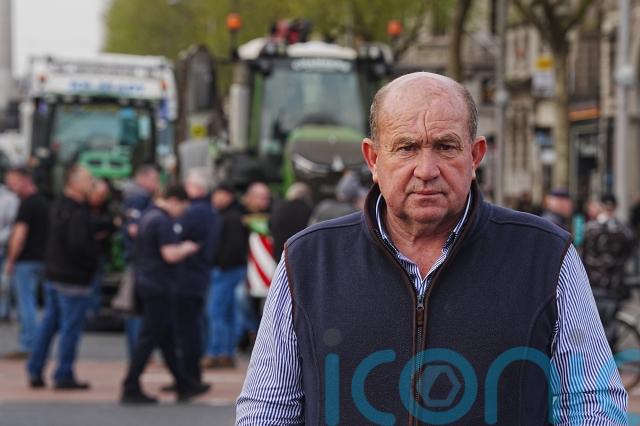
Protesters in Dublin city centre said they had nominated “three or four” spokespeople they want to meet Government leaders.
However, speaking on RTE radio’s Morning Ireland show, one of them, John Dallon, said he does not speak for the protesters blocking fuel depots: “I’m here on the streets of Dublin, I have no voice as regards what’s happening down the country as regards blocking up ports.
“What’s happening down there is out of my hands, I have no control over what happens.”

Subscribe or register today to discover more from DonegalLive.ie
Buy the e-paper of the Donegal Democrat, Donegal People's Press, Donegal Post and Inish Times here for instant access to Donegal's premier news titles.
Keep up with the latest news from Donegal with our daily newsletter featuring the most important stories of the day delivered to your inbox every evening at 5pm.

This publication supports the work of the Press Council of Ireland and Office of the Press Ombudsman, and our staff operate within the Code of Practice of the Press Council. You can obtain a copy of the Code, or contact the Council, at www.presscouncil.ie, Lo-call 1800 208 080 or email: info@presscouncil.ie.