

13 things you'll remember if you grew up in the Kildare bog


The bog hole
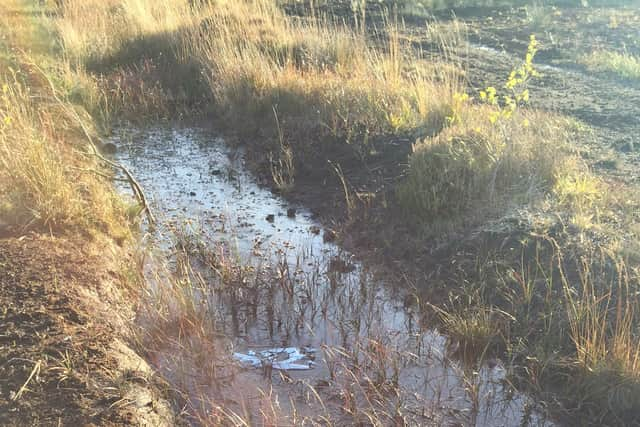
The mystery of what lies beneath. The “undiscovered country, from whose bourn no traveller returns” as Shakespeare might have said.
Parents warned us to avoid them at all cost. A stray rubber boot, a dog, a horse, a ass or at worst a neighbour’s tractor may have been lost beneath the murky bog water, or so legend would have it.
“Stay away from the bog holes,” was the mantra. All very understandable now, but to a child bursting with imagination, it was like a vortex, a black hole, a portal to another universe. Something akin to a gateway for monsters, half bloods and wizards. It had a magnetic pull on all who traversed the Bog of Allen in their youth. John Wayne had quicksand, we had bog holes.
It should added, in the interest of fairness, that there there is no finer stuff for cleaning bog dust from your hands (prior to tucking into half a tonne of hangsagiges than the water in these bog holes.
Such was the all pervasive place of the boghole in the consciousness of locals that the quality of man’s manhood was occasionally referred to thusly: “He has a p**ker that would bate an ass out of a boghole”.
Oul tae and Billycans
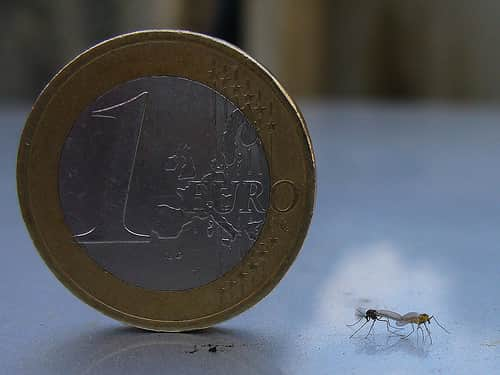
Two durty feckin' midges beside a one euro coin (for perspective).
Midges
A childhood spent on the black plains of Kildare, caked in bog dust would not be complete without the lovely swarms of midges. For some, they were merely irritating insects, but for others who they took a shine to (AKA boggers one and two), they devoured the flesh as if they hadn’t eaten in months. A trip to the bog often left one with swollen eyelids, and a big long itchy welt across the base of the back where your jacket pitched up, as you footed your way up the row. Attempts to shield yourself from these tiny but persistent predators proved fruitless. As evil as the Borg in Star Trek, “Resistance is futile” when it comes to these tiny menaces.
“Dem midges would ate ya, deh durty feckers,” is a common greeting.
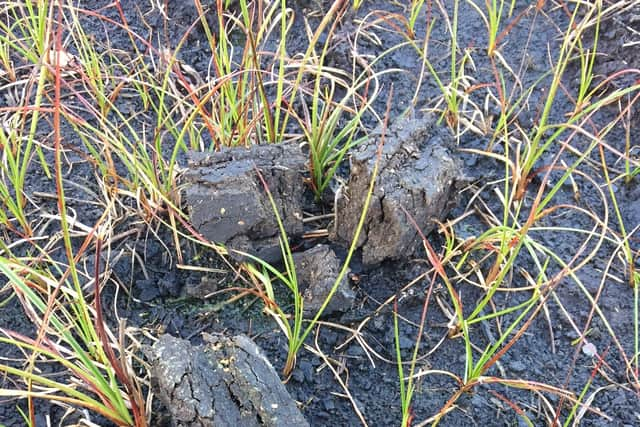
The stray sod
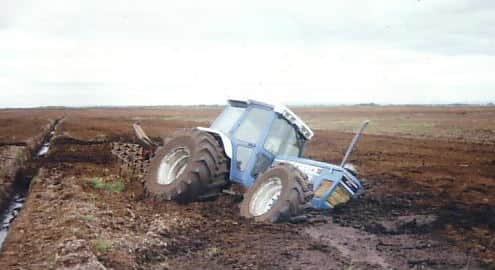
She’s gone to the axles - a good sinking
The excitement of a good sinking incident, to children only. Every man and machine from 13 surrounding plots was called upon to scratch their heads, join in the cursing, offer sympathy and useless advice, accompanied by far fetched tales of something along the lines of "I seen one of the Bórd na Móna lads doin' dis beyont in Ticknevin".
As children we thought Ticknevin sounded very exotic.
She’s gone to the axles - the dreaded words every adult bogger hates to hear. The trailer, or tractor pulling aforementioned trailer, has sunk.
The key to getting out across swampy soft bog terrain is to drive like her like you stole her. Put the foot down, skim across the surface, black muck flying off the wheels. Don’t stop until you get to the roadway.
All the helpers look on, collective breath held, praying she doesn’t suddenly disappear from sight! (All tractors are 'she').
If the inevitable happens and the wheels are dug in, gouging the bog muck out from around them doesn’t really work. Planks are placed in front of the offending wheels in a bid to gain traction and extricate the tractor and trailer from this unfortunate situation.
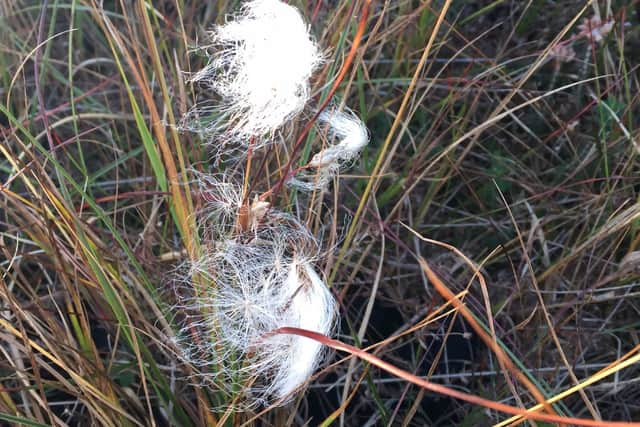
Bog cotton
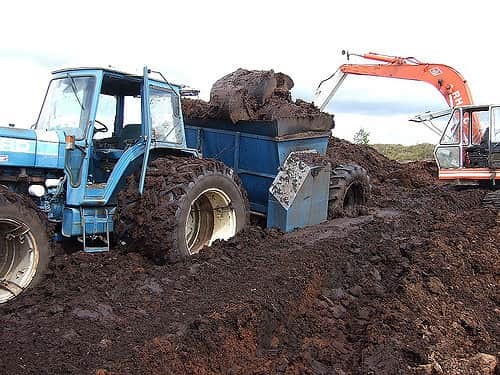
Double-wheelin’
This is the addition of extra wheels on tractors, to make them wider, and thus continue the noble (and forlorn) search for a solution to the plague of sinking tractors.
Health and safety me arse
There are 35 year old photographs of Bogger Two, with siblings and cousins, sitting on the top of a trailer of turf, being pulled home by a tractor, along a bog road, not a safety statement, manual handling course nor a high viz vest between them.
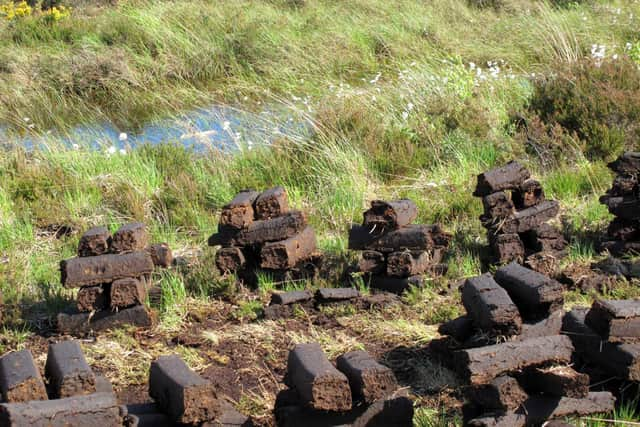
Footing
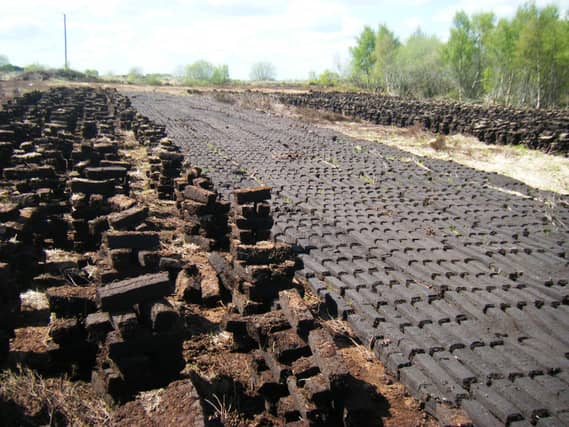
Footing turf takes a certain amount of hand-eye co-ordination, and a good back. To help ease the task, a radio helps time pass as well as the mandatory bottle of water. It’s thirsty work. The key to making a good footing is to select two big sturdy sods upon which to base the construction. Never go too high, because they will only topple over. Five sods high was as much as you could hope to manage. Six might earn a stern rebuke from your oul fella that you were “only blaggardin’.”
Other methods of turf drying include heaping the turf in loose piles to let the air circulate through the mound.
.....and the fortune I'm payin'
This was the refrain of many's a hard-pressed tormented father trying to drag his brood off the couch, away from the television and to the bog. The urging, the pleading, the promises.....
"...and the fortune I'm payin' for them hot showers
"...and the fortune I'm payin' to keep yiz warm in the winter.
There would be an invocation of the neighbour down the road who "has four trailer loads home and in the shed already" and whose "young lads" would be praised from the high heavens.
Some children were offered fivers and tenners, a trip to the cinema, a go on the tractor or, to employ another tactic, the wooden spoon and/or no dessert/holiday/trip to the cinema if they didn't go.
All of this would be wound up with "it's cheap heat compared to the price of oil".
Reeks
A reek of turf was the next step, as you gathered (or goddurred as some used to say) the footings into larger distinct piles. Different people or areas had different ideas for what constituted a reek. Some viewed it as a long, low pile, while others, the artistes among us, piled it five or six feet high, with a 'wall' at the front and a natural flow at the back to let the rain run off.
Work wear
The High Bog
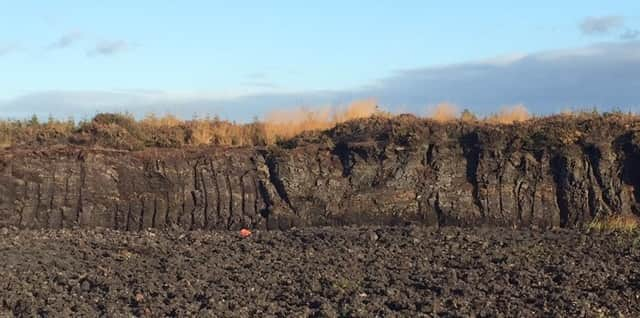
The high bog was usually covered in heather and provided a place where work-shy children tried to hide from the toil.
From up there, you could see for miles and miles, which was slightly scary, because there was nothing to see except heather and the prospect of more work.
Quality
The quality of the turf, like cannabis and coffee, was determined by how dark it was. The darker the better.
In the same way that Eskimos have 36 words for snow, there were quite a few to denote the quality of turf - starting with the driest: Dust, brittle, dry, soft, lumpy, very soft, rale soft, mush, pure shite.