

‘Excessive regulation’ at EU level highlighted by Attorney General
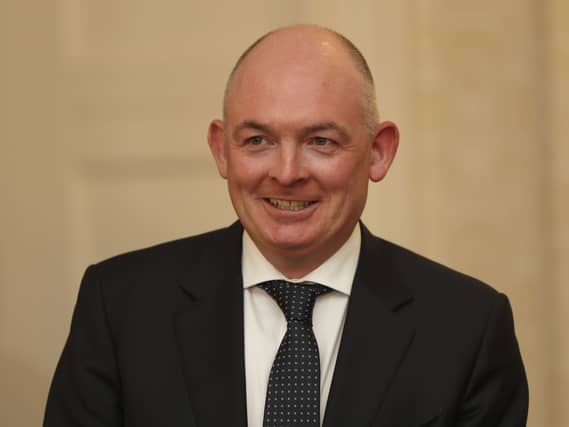

Rossa Fanning also said the legal backdrop has become ‘more complex’.
There has been “excessive regulation” at an EU level, which has been feeding into the system for decades, according to Ireland’s Attorney General.
Rossa Fanning made the comments as part of a panel discussion on the influence of senior civil servants and legal counsel on political decision-making which took place at the Mansion House in Dublin.
He was joined by former Department of Health secretary general Robert Watt, who is now heading up the Dublin City Development Company to regenerate O’Connell Street, as well as Labour leader Ivana Bacik.
Mr Watt said that Ireland’s political system has become too “risk-averse” and that laws are more prescriptive while Mr Fanning said the legal backdrop has become “more complex”.
Discussing risk aversion in the public system, Mr Fanning said: “Sometimes you do have to take risks, and risks can include legal risks, because if you always take cautious legal advice, you will probably never make any big decisions.
“I think that is something that’s part of the thinking at the moment, particularly around the acceleration infrastructure plan.”
He added: “Sometimes people focus on the end result of a judicial review case in the Four Courts and say that’s the problem, but perhaps that’s the symptom of the problem, and the problem is the excessive regulation at an EU level, which provides the legal basis for people to perfectly legitimately bring a court case.
“I think sometimes there can be a simplified view that lawyers are the problem, but court cases in many ways reflect the underlying legal landscape and, actually, in a broader sense, politicians are responsible for that.
“I don’t just mean the current government; I mean politicians across Europe who have fed in for three or four decades to the level of regulation that the European Union now imposes.”
Mr Watt said that the system has become more risk-averse.
“I think certainly the system does need to get to a stage where we’re willing to innovate and fail faster, and accept, because if you try something, you innovate, a lot of ideas don’t work, but we need to try,” he added.
“I think we do need to have a system whereby we recognise that we’re going to try things for the first time. Some of them will not work out, and when that happens don’t beat yourselves up. Don’t engage in show trials. Accept that that sometimes it happens.
“I think over time, certainly in my experience, I joined the Department of Finance in 1993, and I think the system had a reputation of being very hierarchical and stuck in its ways, and so on.
“But I think back then there was a lot of innovation and people were trying.

“I think perhaps maybe because the Dáil is a different place now, the committees are different, maybe the media is different, and I think probably over time, yes, I think the system has become more risk-averse.
“Maybe there’s lots of reasons for that. It could be because we’ve got lots of rules.
“The laws we develop now are probably more prescriptive. The courts have a greater role in terms of putting guardrails on what the Executive can do. So, there’s probably a variety of different things that have come together that have made the system too risk-averse.”
Ms Bacik said there is a “prevailing narrative” that the system of governance in Ireland is too risk-averse and that civil servants and innovators should be freer to take risks.
“I think there’s a certain attraction in that for sure,” she added.
“We see how speedily (Donald) Trump was able to achieve things through Executive order, bypassing Congress, bypassing what until this week was a supine Congress,” the Dublin TD said.
“But where are the risks in that? The risks in that are the risks of authoritarian regimes. Yes, they deliver fast, but at the expense of democracies.
“My second point is I’m not sure the answer lies in a more risk-taking, non-elected body of policymakers.
“I would pinpoint slowness in delivery and lack of delivery and critical infrastructure, like housing, like offshore wind. I would pinpoint responsibility there as a failure of ministers in government to take risks.”