

OPINION: GAA must end 'late changes to the starting XV' farce

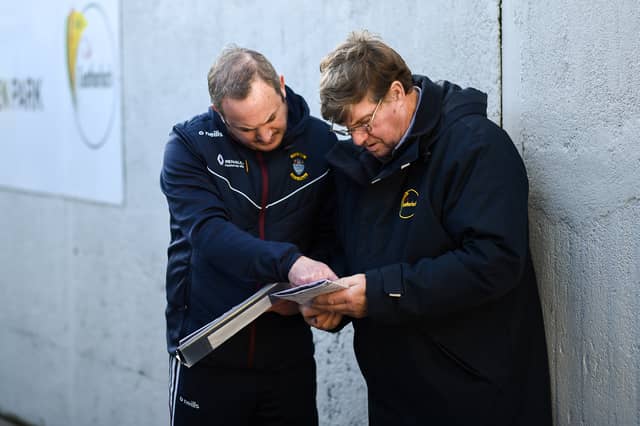

Daragh Nolan breaks down how to eradicate the trend of endless late changes to starting XV’s in Gaelic games matches across the country
Have you bought a programme of late? Only for it to be rendered useless by a string of late changes to starting XV’s for both sides. This farcical trend across the country, in hurling and football, has got to end.
Many of these personnel switches are often confirmed to fans 10 minutes prior to throw-in with talk as far back as the week before a game being on the differences between the team that will be named and the one which will actually start. It is a ‘tactical’ disease that has spread from All-Ireland deciders all the way down to the most modest of club encounters.
This routine makes a mockery of the fans, players and the competition itself. The expectancy of multiple late changes is absurd and it is now a genuine rarity to hear the stadium announcer utter “both teams as per programme.”
The simple fix I would propose is that if there is a forced late change to the starting XV then the player that is removed can no longer come on as a substitute. Strict and simple.
Late injuries and changes of plans are going to happen in sport but pre-planned shifts from the named team to wrong-foot the opposition (not that I ever think it does) are patently ridiculous. You don’t see it in any other elite sport and it is hard to comprehend why it is still tolerated.
If a player is genuinely injured or needs to be removed very close to the game, then teams should be able to replace them from their named bench and add another member to the squad from their standby list but that, as stated, rules the removed party out of the fixture entirely. The player not named in the initial panel who comes in cannot start the game so as to avoid any finagling of the system.
The late changes trend is consistent throughout Kildare’s senior teams and indeed nationwide. Kerry have tried in the past to pull the wool over with the likes of Paudi Clifford not starting (give us a break).
It strikes as unprofessional (ironically) and with all the philosophical depth of an episode of Love Island. It is no more intelligent a strategy than a one arm man trying to fool you with a Three-Card Monte. In a stats-obsessed world of sport, I’d be fascinated if anyone could quantify the benefit (if any) that is gained from these premeditated late switches.
If a player named on the bench is injured and has to be replaced then that should still be permitted. These changes bring far less perceived or instant tactical advantage, although no doubt Jim McGuinness and other innovators would still try to squeeze some sort of opposition deception out of it.
This simple change drastically improves the validity of a match programme, unless of course one sees enormous value in learning that GAA players like to eat pasta and listen to Dermot Kennedy, while not unfairly punishing a team who suffers a genuine late injury to a player.
GAA managers are rarely fooling anybody with their unforced changes and programmes are becoming worth less than the paper they are written on. X is in for Y and 26 is now worn by Q, are you writing this down? I hope you brought a pen to this game. A bit of common sense and we can all move past this charade.