

Mother of Kildare rape accused gives evidence to trial at Central Criminal Court
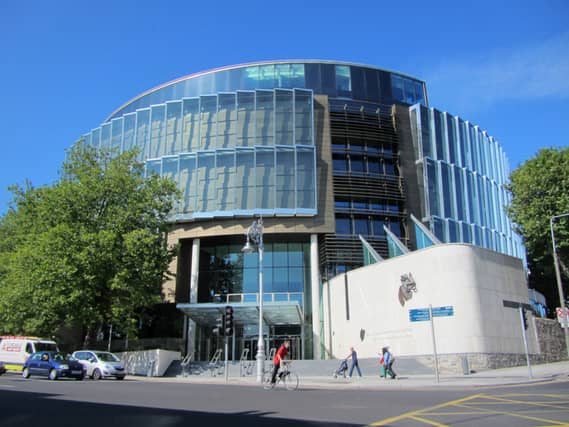

Central Criminal Court
The mother of a man accused of raping a 14-year-old girl has said the girl had “bad intentions” and had “bitterness” in her heart, a trial has heard.
The man (21), who cannot be named for legal reasons, was aged 17 when he allegedly sexually assaulted and anally raped the girl in a derelict building during a game of truth or dare.
The man pleaded not guilty before the Central Criminal Court to one count each of sexual assault, anal rape and defilement of a child at a derelict site in Co Kildare on May 14, 2016.
In his opening address to the jury, Lorcan Staines SC, prosecuting, said the counts of anal rape and defilement were alternative charges relating to the same incident.
The jury had previously heard evidence that the complainant and her best friend invited the accused to hang out with them, but that the other girl later went home before the alleged incident took place between the complainant and the accused.
The accused's mother told Dominic McGinn SC, defending, that two girls came to her house one day and asked if the accused and his younger brother could come out and play with them. She said she refused permission, but the girls were “adamant” and she at last gave her sons permission to go.
The woman said the two girls returned on another day and “insisted” that the accused come out and play with them. She said she gave her son permission to go with the two girls because they were “so adamant”.
Mr Staines asked the woman if she thought the girls had put her son under pressure to go somewhere he did not want to go. The woman agreed, saying she did not want her son to go but the girls were “adamant” and said they just wanted to play.
Counsel asked if the woman thought this was somehow the girls' fault. The woman replied she feels like the girls were at fault because initially they came on the first day and she gave permission because she felt sorry for them, but they came back to her home and only wished for the accused to come with them.
Mr Staines invited the woman to correct him if he was wrong, but put it to her that the impression he was getting from her evidence is that she thought the two girls “tricked” or “duped” her son.
The woman replied that she was saying that these girls had “bad intentions” and had “bitterness” in their hearts. She said if they had no bad intentions, this would not have happened.
In his closing address to the jury, Mr Staines said the jury must put their sympathy and emotion to one side, something which is difficult to do in almost all rape cases and is particularly difficult in cases involving juveniles.
Counsel said there have been a lot of questions about how the complainant reacted and that it is a “classical rape myth” that there is a certain way someone should have reacted. He said that if there is anything “we have learned in situations like this over the years it is that there is no correct way to react”.
Mr Staines said the accused's position is that no penetration took place. He said a doctor examining the complainant 22 hours after the alleged incident discovered lacerations to her anus which “looked recent”.
He asked the jury whether it is reasonably possible the injury is some sort of coincidence or accident, or would such a finding be “an affront to common sense”. He said the prosecution leaves that determination in their hands.
In his closing address to the jury, Mr McGinn said the jury had to look at the evidence from the point of view of the accused. He said they have to look at the evidence presuming that he is innocent and that he is facing three false allegations.
Counsel asked if it was credible that the girl could be forced into sexual activity by “a young boy” like the accused. He described the accused as being “clearly a very quiet boy” and a “very sheltered boy”.
Mr McGinn said there was no evidence in the case that the accused knew the complainant was under the age of 15. He asked whether it was reasonably possible that the accused, who was then aged 17, had no idea how young she was.
He asked the jury if they heard this level of evidence against someone they liked and trusted, would they be convinced he did this against her will or would they have reasonable doubt.
The trial continues on Monday before Ms Justice Eileen Creedon and a jury.