

Monasterevin Boil Water Notice remains in place; over 5,000 Kildare homes still affected after three days


No indication of when notice will be lifted
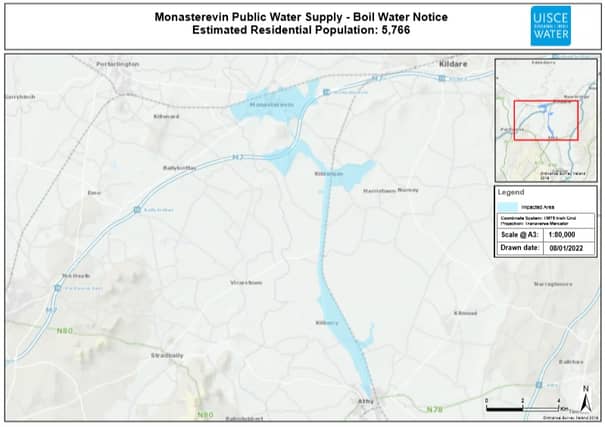
The Boil Water Notice issued for some 5,700 homes in Monasterevin and surrounding areas last Saturday is still in place - and Irish Water will not be drawn on when it will be lifted.
The precautionary notice was issued after consultation between the Health Service Executive, Irish Water and Kildare County Council due to inadequate chlorination of the public water supply due to disinfection issues at the water treatment plant.
The notice affects those served by the Monasterevin public water supply, including Monasterevin, Kildangan, Kilberry and parts of North Athy and surrounding areas.
A spokesperson for Irish Water said on Monday that an investigation is underway to find out the cause of the disinfection issues in this instance, and to mitigate against it happening in the future.
The spokesperson would not be drawn on when the issue would be resolved, but said they would be issuing updates on the situation every two days. They added that addressing the problem is a priority for Irish Water, and apologised for the inconvenience caused to Kildare locals affected.
Irish Water says that water is still safe to use for hygiene purposes, including handwashing, and advised customers to follow HSE Covid-19 advice.
Customers can also check if they are impacted by this Boil Water Notice by visiting www.water.ie/help/water-quality/ and entering their property’s Eircode in the search bar. (Click through the pink 'More Details' button after entering Eircode).
Vulnerable customers who have registered with Irish Water will receive direct communication on this Boil Water Notice and are reminded that the water is safe to consume once boiled and cooled. Those who have concerns can contact our customer care team on 1800 278 278.
Boil Water Notice advice
Water must be boiled for:
Drinking
Drinks made with water
Preparation of salads and similar foods, which are not cooked prior to eating
Brushing of teeth
Making of ice - discard ice cubes in fridges and freezers and filtered water in fridges. Make ice from cooled boiled water.
What actions should be taken:
Use water prepared for drinking when preparing foods that will not be cooked (e.g. washing salads).
Water can be used for personal hygiene, bathing and flushing of toilets but not for brushing teeth or gargling.
Boil water by bringing to a vigorous, rolling boil (e.g. with an automatic kettle) and allow to cool. Cover and store in a refrigerator or cold place. Water from the hot tap is not safe to drink. Domestic water filters will not render water safe to drink.
Caution should be taken when bathing children to ensure that they do not swallow the bathing water.
Prepare infant feeds with water that has been brought to the boil once and cooled. Do not use water that has been re-boiled several times. If bottled water is used for the preparation of infant feeds it should be boiled once and cooled. If you are using bottled water for preparing baby food, be aware that some natural mineral water may have high sodium content. The legal limit for sodium in drinking water is 200mg per litre. Check the label on the bottled water to make sure the sodium or `Na' is not greater than 200mg per litre. If it is, then it is advisable to use a different type of bottled water. If no other water is available, then use this water for as short a time as possible. It is important to keep babies hydrated.
Great care should be taken with boiled water to avoid burns and scalds as accidents can easily happen, especially with children.