

Assistance dogs make a major impact on Kildare families of children with autism

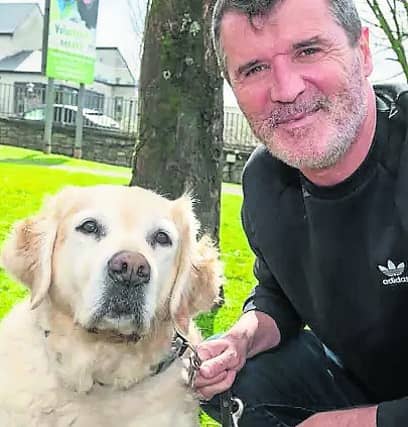

Irish Guide Dogs for the Blind national day is today
There is one name that is synonymous with the Kildare branch of the Irish Guide Dogs for the Blind — that’s Phil Geoghegan from Naas.
A tireless supporter, Phil is instrumental in raising awareness and funds for the IGDB. Today, Friday, May 27 is National Guide Dog Day and people are being asked to support the IGDB by walking, running or cycling 100k for the charity.
“During the latter part of 2021 we raised €33,869 in the Kildare area. That was a very generous response in six weeks. Overall during my time with the IGDB, we are closing in on 1.5 million. It always amazes me the generosity of the people of Kildare,” said Phil.
Caroline Sexton, client service administrator at the IGDB, deals with new assistance dog applications, sorting out health related issues for existing clients, and organising after care.
When asked what feedback they get from families who recieve assistance dogs, Caroline remarked; “It’s phenomenal what we have seen. Life is totally different. Families are not splitting up. They can go places together, and do what other families do.
“It makes a huge difference to the lives of the whole family. The parents get relief from caring for and walking the dog, and the other kids in the house get a new buddy.”
Assistance dogs receive the same initial training as guide dogs.
However, Caroline explained the assistance dogs are then taught how to react to children who are a flight risk. The dogs also have to get used to wearing the assistance dog jacket and get used to being attached to a child. They sense when a child is about to run and anticipate it.
Caroline outlined how the dogs also have to learn not to be distracted in public places and are taken to parks, playgrounds, shopping centres. Once an instructor finds a suitable client for the dog, the parent is brought down for classes as they will be the primary carer. There is also post-class after care and assistance is given as needed. Dogs retire between eight and 10 years of age and the majority are kept on as family pets.
“It is very rewarding when you get it right. We don’t always get it right but we have systems in place to cope when things go wrong. It’s great when clients come back to us and tell us how their life has changed,” said Caroline.
Approximately 85 families receive a dog every two years.