

Kildare coroner's inquest into death of Blessington resident at Naas Hospital issues recommendations to raise awareness of sepsis
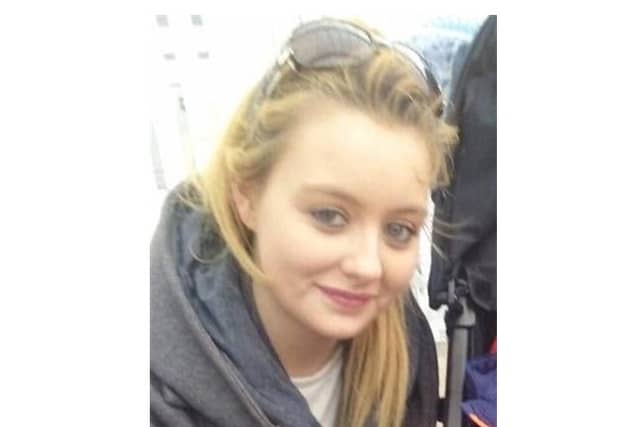

An expert witness in a two day inquest at Kildare Coroner’s Court, sitting in Athy last week, said it was regrettable that there was no consultant at Naas Hospital on Christmas Day 2018 when a seriously-ill woman was admitted and later died.
Dr Peter Boylan was speaking at the inquest into the death of tragic Karen McEvoy, aged 24, who had given birth to her third child, baby girl Ruby, at the Coombe Hospital just a week previously.
The jury of two women and five men returned a verdict of medical misadventure and also issued several recommentations intended to better diagnose and treat the symptoms of post-natal sepsis in order to help prevent deaths due to the potentially life-threatening condition in the future.
Dr Boylan, who is a former Master of the National Maternity Hospital in Holles Street and has 40 years of experience as a obstetrician, was called by Kildare coroner Prof Denis Cusack to give his expert opinion on circumstances of the death of Ms McEvoy.
The inquest had heard on Thursday that Dr Rita Chaudry, consultant anaesthetist, arrived at the hospital at about 3.15pm, by which stage Ms McEvoy was in cardiac arrest.
Counsel for the HSE and Naas Hospital, Conor Halpin SC, pointed out that the on-call consultant Dr Chaudry wasn’t contacted by hospital staff until 2.15pm on Christmas Day and had immediately begun travelling to Naas Hospital and was in telephone contact with the hospital while in transit.
Dr Boylan stated: “The consultant should have been informed earlier.”
Dr Boylan also said in the witness box: “If there is a case of a seriously-ill woman, a consultant should have come into the hospital as soon as they were aware she was there, even if the weren’t asked to do so by a hospital staff member.”
After the coroner sought further clarification on this point, Dr Boylan added: “This is a necessary model of practice.”
The situation in Naas Hospital on December 25, 2018 also led one of the recommendations of the jury — that a consultant must be present in an Emergency Department if a critically-ill patient with sepsis or in septic shock is en route.
Coroner Prof Cusack said he was forwarding all the recommendations to the Minister for Health Stephen Donnelly and the CEO of the HSE Paul Reid, to the Coombe Hospital, Naas Hospitals and the Institute of Obstetricians and Gynaecologists.
The inquest heard that Ms McEvoy she became ill in the days after giving birth at the Coombe Hospital and developed maternal sepsis and septic shock secondary to infection.
Sepsis is the body’s extreme response to an infection and is a life-threatening medical emergency.
Last November, the Coombe Hospital apologised for the ‘failings in care’ when Ms McEvoy’s family settled an action in the High Court.
On December 23, 2018, Ms McEvoy was using crutches when she went back to the Coombe Hospital with her baby daughter for routine screening of the baby and it was claimed she was advised to attend the hospital’s emergency department.
She attended the emergency department complaining of severe back and abdominal pain and feeling generally unwell.
It was claimed Ms McEvoy was not admitted to hospital and she was discharged without her condition having been diagnosed.
On Christmas Day, Ms McEvoy’s condition deteriorated and she was taken by ambulance to Naas Hospital just after midday and died before 4pm from multi-organ failure with septicemia due to an infection.
Other recommentations from the jury included that a national leaflet on post-natal sepsis be provided to all mothers on discharge from maternity services and a health information campaign be conducted to increase awareness among the partners and families of mothers about post-natal sepsis.
The jury recommended Public Health Nurse appointments with new mothers take place in mothers’ homes and that nurses should have the necessary equipment to check vital signs like thermometers.
The five men and two women also requested that post-natal PHNs and midwives be trained in the recognition of sepsis.
All patients attending the emergency room of the Coombe Hospital must be assessed by a doctor, the jury said.
Speaking after the inquest verdict at Athy Courthouse, Ms McEvoy’s partner Barry Kelly said in a brief statement: “I’m very happy with the verdict and hope that the recommendations will help save the lives of other women in this country.”
The inquest heard that Ms McEvoy had attended a public health nurse (PHN) appointment in Naas on December 21 after which she had told her partner Mr Kelly that the nurse had said it was ‘normal’ to have abdominal pain after giving birth.
PHN Doreen O’Sullivan told the inquest she had not recorded any of Ms McEvoy’s vital signs as at the time as the relevant equipment wasn’t available to her at the time.
Geraldine Kavanagh was the midwife on duty in the emergency department (ED) at the Coombe Hospital on December 23, 2018, when Ms McEvoy attended on crutches to help her with walking.
Ms Kavanagh told the inquest that there was no record of her triage of Ms McEvoy because notes she had been inputting into a computer had been wiped in a temporary electrical malfunction.
Ms Kavanagh also said she did not record Ms McEvoy’s vital signs, or refer her for medical assessment — which the inquest heard was in contravention of the hospital’s ED triage guidelines which had been in place since earlier that year.
Ms Kavanagh assessed that Ms McEvoy most probably had sciatica and advised her to attend St James’s Hospital or Tallaght Hospital for an X-ray if the pain got worse.
But Ms McEvoy wasn’t seen by a doctor and no referral letter was generated.
Mr Kelly said after the verdict: “Karen’s death was preventable. We always knew that but today we heard it.
“She was an amazing mum, a brilliant lady and she will always be missed. She got her day today.”
Karen’s mother Margaret McEvoy, flanked by the late woman’s father Alan Gilbey, said afterwards: “It’s been a really horrendous three years, and a tough two days.
“I hope there is a lot of awareness put out there about sepsis as I don’t want my daughter’s name to be forgotten.”
She added: “Christmas will never be the same for us again. What happened to Karen was so unfair.”
Mr Kelly thanked his family as well as his legal team led by solicitor Niamh O’Brien of OBM Solicitors, as well as Esther Early Bl and Richard Kean SC.
During his evidence, Dr Boylan added that it was likely that a more thorough examination of Ms McEvoy may have given a diagnosis of sepsis.
He also conceded that the signs of sepsis can be difficult to interpret and that it can be a difficult diagnosis to make in the early stages.
The inquest also heard that post-natal sepsis is extremely rare in ireland and there were only two cases between 2009 and 2019.
As a consequence, he commented that many healthcare workers may not be aware of the tell-tale signs.
He added that there had been an increased understanding of sepsis among healthcare professionals over the past 20 years.
He continued by saying that it was ‘regrettable’ that guidelines were not followed [at the Coombe Hospital] on December 23.
He told the inquest: “If Ms McEvoy had received intensive treatment from December 24 onwards, the outcome may have been different.”
He also commented that it was ‘debatable’ if Ms McEvoy was brought direct to St James’ Hospital on December 25, 2018, instead of Naas General Hospital — which had been discussed by medics at the time — whether the outcome would have been different.
He commented; “There are no guarantees in medicine, unfortunately.”
During the inquest, which heard from 17 witnesses, Coroner Prof Cusack had said: “This inquest is about women’s health and women’s safety and the men who are the partners and spouses.
“We want to get this right.
“We are very grateful for the doctors and nurses attending.
“It is not comfortable for some of them but we must have a comprehensive inquiry.”
He added: “Foremost in my mind is the partner, family and friends of Karen.
“We are here for Karen and we are here of the women and men of Ireland.”
The inquest had been due to be held in April 2020 but was delayed by two years due t Covid-19 restrictions.
Prof Cusack had told the jury that the inquest was aimed at establishing the facts, but legally, could not blame any party or exonerate them from blame.
A letter read out to the inquest on behalf of the Master of the Coombe Hospital, Dr Michael O’Connell, offered sincere apologies to Mr Kelly and his three children “for our failings in care afforded to Ms McEvoy at this hospital on December 23rd, 2018.
Dr O’Connell said: “I fully accept that these failings should not have happened. I can’t begin to imagine the consequences of Karen’s sad loss on you, Jake, Toby, Ruby, your extended family and Karen’s family.
“We in the Coombe are truly sorry for the distress that Karen’s death has caused.”