

KILDARE BEER COLUMN: A beginner’s guide to getting to grips with beer styles
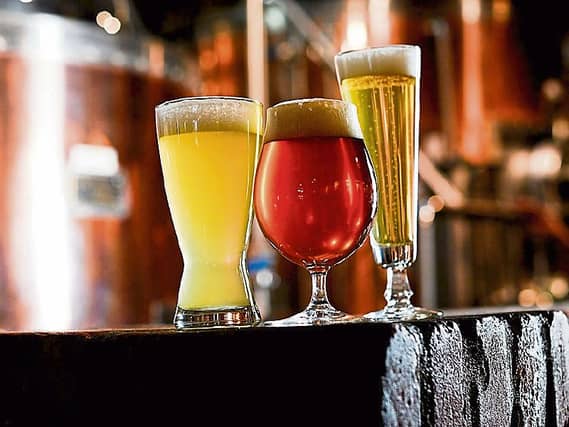

Find out more
When it comes to beer styles the Beer Judge Certificate Programme (BJCP) lists hundreds of them, and warns that they are continuously evolving.
Read also: Naas mourns the passing of Peter Doyle
So how does someone dipping their toes into the craft beer world get a taste for different beers, or even work out what they might like to drink?
The BJCP website is an invaluable resource to help you tell a Berliner Weisse from a London Porter. But before you get into the nitty gritty and complexities of specific beer styles, we believe that having a general grasp of the broader beer categories can help ensure you are drinking a delicious beer, and hopefully give you a reference point from where to find new beers to enjoy.
Provided a beer is brewed to style, knowing about different styles should help you choose a beer that is just right for you, and ensure you are getting something you will enjoy in your beer glass.
There are a few key ways of categorising beer styles.
Firstly, beers can be differentiated by the ingredients used to brew them: choosing different types of grain or even different barleys will impart specific characteristics, flavours or even colours to the finished beer. Wheat, rye, barley malt, rice and sorghum each have their own attributes.
Our advice is to start with a beer you enjoy and carefully read its ingredients. While most beer is brewed with malted barley, it is interesting to note the different grains or adjuncts which turn up in your favourite brews.
Once you know what makes a beer taste the way you like it, you can then seek out these ingredients in other brews.
As ingredients often influence a beer’s colour, this is another way to help categorise a beer; dark coloured beer such as roasty stouts fall at one end of the spectrum and tend to be choc-full of roasted and malty flavours with notes of coffee and chocolate; bright clear beers such as lagers or pale ales, at the other end of the spectrum are often crisp, light, refreshing beers.
However, watch out as colour alone is not always an indication as to how a beer will taste.
We have imbibed the palest-coloured beers that are jam-packed with flavour, and dark beers that surprise the palate with their elegant, light, drinkability. Just as a book can’t be always be judged by its cover, the colour of a beer can point you towards a particular style direction but can sometimes be misleading.
Throughout history, specific geographical areas have become synonymous with the production of particular beer styles.
Beers from Belgium, for example, are known for their malty backbone, but Belgium is also known for its brewing diversity. From here, you can expect to find well-crafted high ABV beers as well as delicious sours.
Germany has a reputation for producing excellent, clean, crisp lagers, while in the USA hops are king and west coast IPAs pack a bitter, aromatic, often high-alcohol punch.
Getting to grips with the general styles associated with a particular country or region will help you navigate through the beer taps and bottles of your local pub or off-licence all the easier.
One of the most distinct ways of differentiating beer styles is by the type of yeast used to brew them. It can be argued that all beer falls into one of two categories: ales or lagers depending on the type and the way a beer is brewed.
As you know from our previous articles, all yeasts devour sugars and produce CO2 and alcohol to make beer, but the method in which they do this is different, depending on the strain of yeast.
Historically, yeasts can be broadly divided into two types; top fermenting yeasts or ale yeasts, so called because the yeast cells flocculate (gather together) at the top of the fermenting vessel; and bottom fermenting yeasts, such as lager yeasts, strains which prefer to flocculate at the bottom of the fermenting vessel.
In simple terms, that makes every beer brewed either an ale or a lager. While many of today’s modern yeast strains like to confound this generalisation, there is one constant, distinguishing, important difference, and that is temperature.
Ale yeasts like warmer temperatures; they become dormant below about 12°C, while lager yeasts will happily work at temperatures as low as 4°C. Different yeast strains impart different characteristics, so you can get a steer towards what to expect them to taste like by knowing if a beer is described as an ale or a lager.
So when you’re faced with unfamiliar styles, we hope that getting to grips with these simple ways of framing and categorising beers will help make your next beer decision a little easier.