

Kildare Animal Foundation came to the rescue of lots of wildlife in 2020

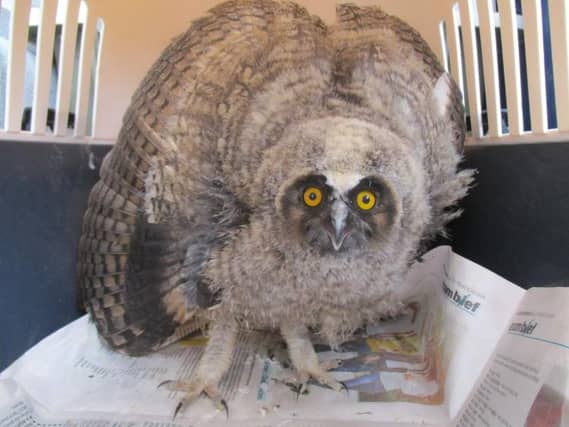

Over the past year, the Kildare Animal Foundation has stepped in to offer urgent veterinary care to a several birds and animals who required assistance.
Kildare Animal Foundation has been in existence for over 20 years and rescues and rehomes a whole range of animals.
In recent years Kildare Animal Foundation have established a much-needed Wildlife Centre that rescues and safely releases injured and orphaned wildlife.
Herring Gull
In April, a herring gull was tangled up in fishing line and was helped out by a number of experts including Kildare Animal Foundation.
He was rescued from a lighting mast in Fassaroe, Bray.
The bird, named Brian, was later said to be on the mend and preparing to leave isolation, according to Wicklow Fire Service.
Bray firefighters had launched a turntable ladder towards the gull who was several metres in the air.
The bird was brought to safety and examined by a vet.
Birdwatch Ireland, the ISPCA and the Irish Wildlife Trust were also involved.
Baby Owl
In June, the Foundation accepted a baby owl after it was referred by the ISPCA when it was discovered stranded on a busy road in Daingean, Co Offaly.
ISPCA Inspector Deirdre Scally said, “I discovered the baby Owl, less than a month old and it appeared to have fallen from a nest in the tall overhanging trees above.
“After observing the area, there was no sign of the chick’s parents and the road was too unsafe to monitor further from a distance.
“Although a little dazed, there was no obvious sign of injury.
“So I transported the chick to the nearby Kildare Animal Foundation’s Wildlife Unit for further assessment and rehabilitation”.
Female long-eared Owls can lay from three to eight eggs at a time.
They will then incubate them for about 25 days.
Her mate will come to her side often, bringing food for her to survive on until she can go hunt on her own again.
The young birds tend to leave the nest shortly after they are about a month old.
Brown Booby
In July the tropical Brown Booby seabird, which made national headlines after it was the first of its kind spotted in Ireland, unfortunately died while in the care of the Foundation’s staff.
The rare visitor was being treated in intensive care at the Foundation’s Wildlife Unit.
It had been noticed by bird watchers in Greystones, Co Wicklow and was taken into care by the National Parks and Wildlife Service after concerns were raised about its condition.
The Brown Booby’s usual habitat is around the West Indies, the Gulf of Mexico and the Caribbean Sea.
The Brown Booby was transported to Kildare, where it received vet treatment for exhaustion and malnutrition.
However the Kildare Animal Foundation later announced the sad news of the bird’s death. The bird’s condition deteriorated and it passed away peacefully. Its remains were returned to the National Parks and Wildlife Service for further scientific study.
The Foundation thanked the public for their messages and calls of support while caring for the rare visitor.
Meanwhile, in a seasonal warning, the Foundation advised householders that removing leaves also eliminates vital wildlife habitat.
The experts said: “Fallen leaves offer food, shelter and nesting material for a wide variety of wildlife, such as hedgehogs.
“So please be mindful when cleaning up your garden...if you do not want them all over your lawn and yard then leave piles in certain areas and that will help wildlife in your area.”
This year, the 12th annual Curragh Dog Walk was unable to be held due to Level 5 restrictions.
Instead, dog owners were asked to walk their dogs and donate online at www.animalfoundation.ie.