

KILDARE: Watchdog criticises Lakeview mental health unit


Detailed report also recognises improving compliance
Maintenance standards at County Kildare’s foremost mental health facility have been criticised.
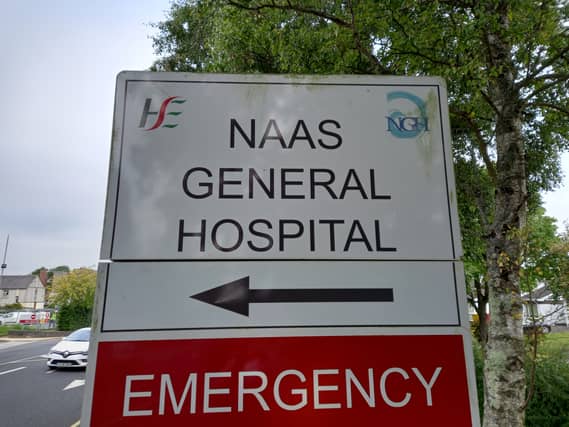
This follows an inspection of the Lakeview Unit at Naas Hospital, a 30 bed unit which provides short term care for people with acute mental health needs. It covers County Kildare and west Wicklow.
The inspection report indicated the facility was not kept in a good state of repair externally and internally.
Specifically, windows overlooking the downstairs garden were dirty while walls, window ledges and cobble locking in the downstairs garden were stained and dirty.
The report stated: “A large crack was observed on a wall in a corridor on the first floor. Window ledges in some bedrooms were chipped and damaged. Drawers were missing from two bedroom lockers. The flooring on the first floor was damaged.”
The assessment also pointed to “an observed hazard” - which was rectified at the time of inspection.
“Ligature points (anything that can be used to tie a cord or rope) were not minimised to the lowest practicable level, based on risk assessment,” the report added.
Nevertheless, the unit has had consistently improving overall compliance, rising from 61% to 86% between 2018 and last year when this assessment was undertaken.
The report noted that there was inadequate ventilation because some bedroom windows did not open.
The report also criticised individual care plans because these had not been developed by the required number of multi-disciplinary team professionals or were not reviewed by the team.
The report also pointed out that not all staff received education and training to enable them to provide care and treatment in accordance with best practice, because they had not received instruction in basic life support, fire safety, management of violence and aggression.
And not all healthcare staff were trained in the Mental Health Act.
There was also criticism of the seclusion facilities - used to provide a room separate from other patients.
These were described as “not furnished, maintained, and cleaned to ensure respect for resident dignity and privacy, as far as practicable, as the seclusion room walls and door were very dark and natural light was minimal.”
The perspex on the window was dirty and perspex on the back of the seclusion room door was dirty and scratched while a ceiling tile outside the seclusion room door was stained.
In the case of one patient, who had been at Lakeview for more than three months,there was no documented evidence in the person’s clinical file that the responsible consultant psychiatrist had undertaken an assessment of the patient’s capacity to consent to medication.
The assessment was carried out by the Mental Health Commission, an independent statutory body which promotes high standards of care and good practice in the delivery of mental health services and ensures that the interests of those involuntarily admitted are protected.
The MHC also observed good practices and quality initiatives during inspections at the centres (reports from nine units were published) including the provision of a range of appropriate recreational activities for residents including board games, art materials, walks, outings, bingo, chess games, books, TV, dominoes, and music; monthly audits of all individual care plans; the translation of the resident admission pack into both Polish and Russian languages.
Following the assessment the MHC requires corrective and preventive action plans from all services where non-compliances are identified, each of which must address each issue specifically. It also monitors the implementation of these on an ongoing basis and seeks further information and action as necessary.
Enforcement action is taken when it is concerned that the care and treatment provided may be a risk to the safety, health and wellbeing of residents, or when ongoing non-compliance is not addressed.