

History: 1920 saw strikes, Auxies and burning streets in Kildare
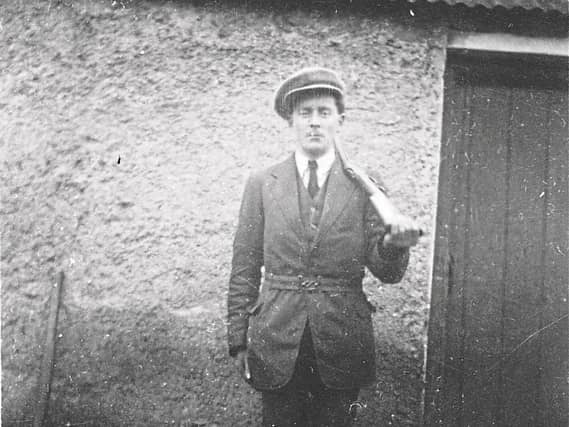

James Durney of the Local Studies section of Kildare Library Service looks forward to a year of commemorations to mark the events of 1920
1920 began a decade that was known as the ‘Roaring Twenties’ or the ‘Jazz Age’ in America, while in Europe the period is sometimes referred to as the ‘Golden Age Twenties’ because of the economic boom following World War I.
The year began in optimism with the foundation of the League of Nations, whose principal mission was to maintain world peace.
In the United States the ‘Noble Experiment,’ the Prohibition of alcohol, became effective as of January 17, 1920. In Eastern Europe Poland’s defeat of Soviet Russia stopped the spread of Communism into the West.
In Ireland, 1920 was a turbulent year. It too, began in optimism with the election of Sinn Féin majorities to Urban District Council in County Kildare and many other counties. However, the deteriorating political situation led to the arrival on March 25 of British recruits, mainly ex-soldiers, to the Royal Irish Constabulary.
They become known from their improvised uniforms as the ‘Black and Tans’. A company was based in Naas Military Barracks and also at the Curragh Camp, where a training depot was opened.
On 5 April Irish republican prisoners began a hunger strike in Mountjoy Prison, Dublin, demanding prisoner of war status.
A two-day General Strike from April 12-13 followed throughout Ireland in support of the hunger strikers. The British subsequently released the republican prisoners. The IRA began a policy of burning abandoned police barracks and tax offices throughout the county in April, which continued in County Kildare until July.
The refusal of Dublin dock workers to handle British military material escalated into a countrywide protest; the strike spread to County Kildare in May when railwaymen refuse to handle munitions or work on trains carrying troops.
That same month Maynooth Town Hall and Courthouse were blown up.
The June County Council elections led to a Sinn Féin majority in most counties, including Kildare. On June 21, Kildare County Council pledged allegiance to Dáil Éireann, and began refusing to recognize British government directives.
The first recruits — former British Army officers — joined the RIC's Auxiliary Division on 27 July. Initial training was at the Curragh Camp and the Auxies, as they were known, soon surpassed the Black and Tans in notoriety.
On August 20, two RIC men were killed in an IRA ambush at Greenhills, Kill. Retaliation by the Black and Tans saw Boushells boot shop burned down in Naas and Broughall’s pub ransacked in Kill.
Dublin student Kevin Barry was hung in Mountjoy Jail on November 1. His death aroused the nation in protest, as he was only 18. In an RIC raid at Knockbounce, Kilcullen, on 18 November, two IRA Volunteers were wounded and five arrested.
Three days later, on 21 November, a day that would forever be known as Bloody Sunday, the IRA shot dead fourteen British undercover agents in Dublin. Later, in retaliation, the Auxiliaries opened fire on a crowd at a GAA football match in Croke Park, killing 13 spectators and one player and wounding sixty. Frank Burke, Carbury, played with Dublin that day, while Mick Sammon, Clane, was the referee.
Three republicans were shot dead that night in Dublin Castle ‘while trying to escape’.
One of the men, Peadar Clancy had extensive Naas connections. The war continued to spiral with a successful IRA ambush in Kilmichael, Co Cork, led by the famous guerrilla leader, Tom Barry, in which 18 Auxiliaries were killed, while on December 11 to 12, the Auxies went on a rampage burning down large parts of Cork city centre.
County Kildare Decade of Commemorations Committee will be organizing events to commemorate significant happenings in the county during 1920.
The Department of Housing, Planning and Local Government compiled and curated a mobile exhibition, detailing the key local government events over the past 120 years, which will be on display in Maynooth Community Library in December and Monasterevin Library in Janaury 2020 and in Leixlip Community Library in February.
In early 2020, the Local Studies Department, Newbridge Library, will launch a more detailed and comprehensive account of the Co. Kildare War Dead 1914-1918. This will be a substantial addition to those lists already compiled online and in book format.
The two-day General Strike of April 12-13, 1920, and the County Kildare railwaymen’s refusal to handle munitions or work on trains carrying troops will be commemorated with a series of library talks and presentations.
On June 12-13, the fourth Annual Irish Military Seminar will be held in the Riverbank Theatre. The Friday evening (June 12) event will focus on Irish Peacekeepers with the main theme being the Niemba Ambush of 1960.
The Saturday (June 13) event will be a series of lectures by renowned Irish historians on themes from Ireland’s past military history, which will include several lectures on the War of Independence.
In August, Local Studies Librarian James Durney will deliver a lecture for Kill Local History Group on the Greenhills Ambush of August 20, 1920 when two RIC men were killed. In retaliation the Black and Tans burned Boushells boot shop in Naas and ransacked Broughall’s pub in Kill.
The John Devoy Symposium held in Naas in September will center on the theme ‘1920: Revisited’ and will focus on Bloody Sunday, 1920.
See www.kildare.ie/ehistory and follow the County Kildare Decade of Commemorations Facebook page for updates and further content.