

A deep dive into the psychology of burglars in Kildare

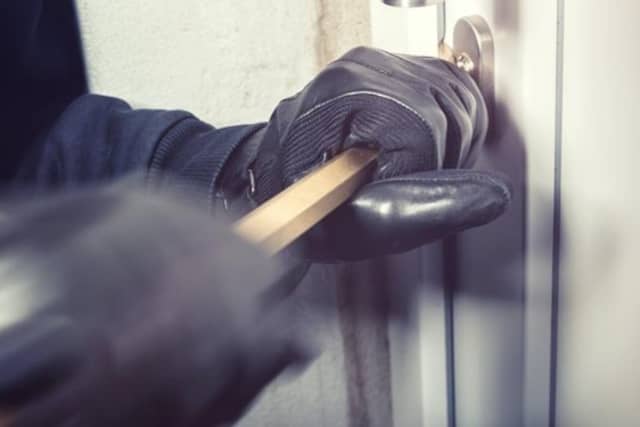

Experts offer their unique insights behind the statistics
Burglaries are an unfortunate reality that many people in modern society have to contend with.
In fact, there were 16 burglaries per 10,000 people recorded in County Kildare in 2025, in line with the national average, and burglaries in the combined Kildare and Carlow Garda Division fell by 20 per cent in the first three months of 2026.
Despite this, burglaries are often reported from towns, villages and even rural properties all across the county, as well as businesses and construction sites.
Given this abundance of coverage, it can seem like a rampant problem that’s only getting worse, but in order to accurately assess the rate of burglaries in the county, the Leinster Leader has contacted three experts on the topic.
They have also explained what motivates burglars, the most commonly stolen items, and the best ways that Kildare residents can prevent falling victim to burglars in the first place.
ASSISTANT PROFESSOR OF CRIMINOLOGY
The first expert that the Leader contacted in order to examine the topic of burglaries in Kildare was Dr Christopher Schreck, an assistant professor of criminology at Maynooth University.
Previously a professor at the Rochester Institute of Technology in the United States of America for 21 years, Dr Schreck spoke about the typical modus operandi, otherwise known as an ‘M.O.’, of a burglar.
He explained: “People engage in burglary because it's a quick and easy way to get money or something of intrinsic value, but it is uncommon among all [other] the crimes, because its rewards do not usually justify the risk.
“A burglary can get complicated and dangerous very quickly if they're discovered in a house that is not theirs, so everything about the M.O. reflects opportunism and efforts to manage risk.”

He continued: “Burglars overwhelmingly prefer unoccupied residences or businesses.
“Residential burglary often happens in broad daylight because there is a greater probability that the occupants and neighbours will be at work or at school.
“Burglars do other things to check if a house is occupied; for example, they can just walk right up to the front door and ring the doorbell.
“If someone opens it, they can give any plausible excuse for being there: they're spreading the word of Jesus, or they need directions to somewhere, or they ask if someone lives there and let themselves be told they had the wrong address.
“If no one answers, and no angry dog is barking, they simply try the door. If it's unlocked, they walk in and help themselves; if it's locked, and it's safe to do so, they walk around to see if there are any unsecured windows or doors.
Dr Schreck also said: “Burglaries often don't involve any forced entry, because either the occupant or their children left an opening unsecured. Breaking in is much riskier because there's noise and visual evidence to anyone nearby, so there needs to be an entry point that's concealed with fences or vegetation from casual surveillance.
“Once they're in, the bedroom is the likeliest place to begin; they take the pillowcases and shove in anything portable and valuable, like cash and jewelry. Anything that cannot be easily carried, however expensive, just gets left.
“They conduct their search by ransacking the place, flinging drawers, clothes, and mattresses, and get out within a few minutes.
He also pointed out: “While burglars often aren't personally known to their victims, they live nearby, or are a regular visitor to the area, so they're familiar with the local routines.
“Burglars often work jobs like everyone else, so at work, they might notice that cash is kept unsecured on-site at all hours, and that there are stretches of time when the cash is unprotected because the building is empty.”
Dr Schreck added: “When burglars see or hear about people in the community sharing pictures about the great time they're having in Capri, such news conveys to the burglar the knowledge that someone's house is unoccupied.”
When asked by the Leader about examples of items that are commonly stolen from homes, Dr Schreck replied: “Burglars usually prefer anything valuable that is also easily portable, such as jewellery and cash; also alcohol, because they can consume it. Burglars tend to just grab what they can, unless they have reason to believe that they can work uninterrupted.
“While the damage and cost of replacement to the victim can be high, the burglar trying to sell stolen goods is not getting anywhere close to that value except for the cash they took.
"However, many items taken turn out to be worthless and just get discarded,” he concluded.
And in the context of businesses, Dr Schreck had this to say: “It's still dependent on the portability and value of what's onsite, but sometimes businesses have an inventory where there's a black market, like controlled medications at a pharmacy, or else of goods that are not intrinsically valuable but needed to facilitate other crimes.”
He added: “For example, meth labs flourish in the rural United States partly because making crystal methamphetamine requires anhydrous ammonia, an ingredient used to fertilise crops.”
RETIRED GARDA
The second expert that the Leader consulted was Graham Kavanagh, who is arguably best known for his years as a crime prevention officer on Crimecall between 2018 and 2022.
Now, Mr Kavanagh works as a community safety toolkit research and development officer with Muintir na Tíre, an organisation which assists people through Community Alert and other community-led initiatives.
Speaking on the subject, he offered a very poignant observation about preventing burglaries from occurring: “One of the consistent lessons from experience is that burglary prevention is not simply about locks, alarms or policing.

“Strong, connected communities themselves form an important layer of prevention; knowing your neighbours, keeping an eye on older, vulnerable or isolated residents and being willing to report suspicious activity promptly can make a significant difference.
“Communities should be alert to unfamiliar vehicles or individuals whose behaviour appears out of place; where something causes genuine concern, it is important that it is reported in a timely manner rather than simply discussed among neighbours hours or days afterwards.”
“The broader message I would emphasise is that community safety is everybody’s business; gardaí have an important role, but prevention also involves residents, Community Alert groups, local organisations, businesses and neighbours working together.
“Locks, alarms, lighting and good physical security matter, but they are considerably more effective when combined with communities where people know one another, communicate and are prepared to act when something does not look right.”
Mr Kavanagh concluded by clarifying: “These comments are offered from a community-safety and prevention perspective through my current work with Muintir na Tíre, rather than as operational garda advice; they reflect long-established and tried-and-tested principles of burglary prevention and community-led safety.”
BARRISTER
The third and final expert that the Leader contacted was former Garda Brian Jacob, who, as of last year, is now a Barrister of Law.
However, before that, he served as a member of An Garda Síochána for 30 years, retiring at the rank of Sergeant. He was also a common face and voice as a court presenter in Naas District Court between 2014 and 2025.
Mr Jacob explained that although he was originally based in Dublin, he was transferred to Kildare in 2001.
He went back into uniform initially and was then selected for a task force that specifically targeted burglaries.

When asked by the Leinster Leader about his experience on the subject of burglaries, Mr Jacob had this to say: “I have attended, investigated and prosecuted hundreds of burglaries; from the simple sneak and creep to aggravated burglaries where weapons got used.
“My most notable capture in a line of burglaries saw an elderly couple, aged 86 and 83, who were tied up and injured with bread knives to reveal the location of their pension money.
“The perpetrators were located and prosecuted; he got eight years and she got six years.
“As my role as a prosecutor, I only dealt with [Naas] District Court Cases, but I have prosecuted thousands of burglars.”
Mr Jacob also said that a large number of people who fell victim to burglaries that he had contact with expressed a great deal of ‘shock and upset’ to him.
He asserted: “The overriding emotion was nearly always fear of a return burglary and invasion of privacy.”
Mr Jacob also estimated, in his professional opinion, that around 95 per cent of burglaries are committed ‘by professional burglars who see this as their livelihood’, and, in his experience, they do not target people, but rather houses.
“The last thing they wish to find is an occupant; they want to get in and get out as soon as they can with [stolen] items,” he added.
Moreover, Mr Jacob gave this insightful view into the world of burglaries in Ireland: “In my experience, 90 per cent of burglaries are committed by approximately 1,000 criminals nationwide.
“When they get caught (as they invariably do), they get bail and then reoffend vigorously, as they know they will be away in jail for a year or two; they accumulate a nest egg, and upon release they revert to their trade.
“I know of cases with criminals who have amassed convictions for burglary of over 75 convictions; they only get caught approximately one in five times.”
Mr Jacob also noted that most travelling criminals ‘need good road infrastructure’, such as a main motorway, in order to assist their crimes.
When asked for his view on whether or not burglaries have specifically increased or decreased in Kildare, Mr Jacob responded: “I actually think burglaries have dramatically decreased, but are on the rise since Covid [2020 and 2021].
“When the pandemic was on and there were restrictions, burglary rates fell off a cliff; all the resources that were put into detection and prevention operations all were ceased.”
He added: “Plus, the prosecution of gardaí involved in chases has had a completely demoralising effect on task forces and burglary units.”
In conclusion, while it is not the case that burglars are running riot throughout Kildare, such crimes do happen, and can happen at any time and any place; it never hurts to stay vigilant and to educate oneself on the best ways to prevent burglaries from occurring in the first place.
KEY STATISTICS
- Kildare recorded 16 burglaries per 10,000 people in 2025 – matching the national average
- 20 per cent decrease - burglaries fell by 20 per cent in the combined Kildare and Carlow Garda Division in Quarter 1 of 2026
- 118 fewer burglaries - the reduction represents 118 fewer reported burglaries compared with Q1 2025
- 11 Garda Divisions saw increases - 11 divisions recorded higher burglary levels, while two remained unchanged and eight recorded decreases
Funded by the Courts Reporting Scheme.