

Taoiseach hopes ‘behind-the-scenes work’ results in talks with unions

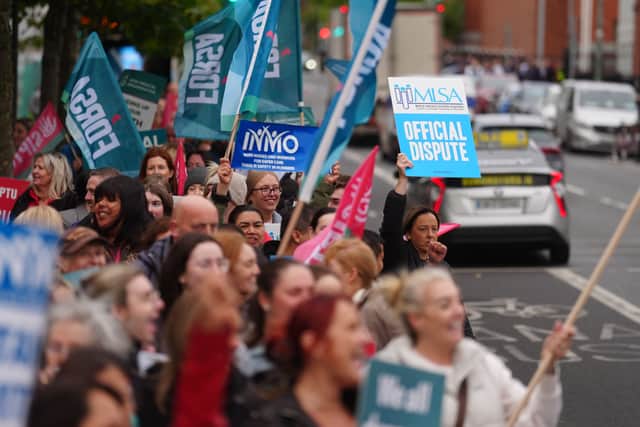
Micheál Martin said the Government wants negotiations to commence in respect of a national pay agreement.
There “clearly is a platform for negotiations” with public service unions, the Taoiseach has said, as he expressed hope that “behind-the-scenes work” would result in a formal process.
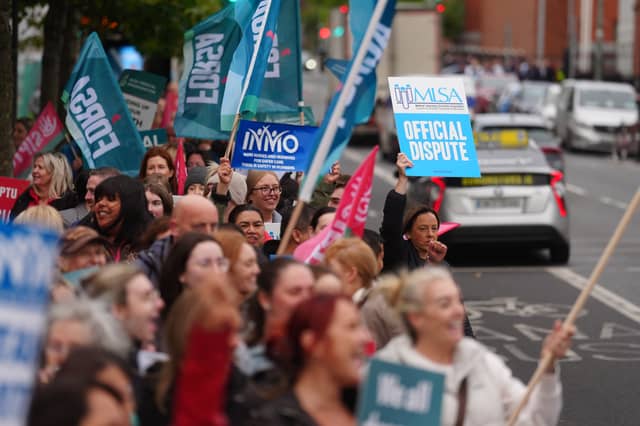
Micheál Martin said Government wants negotiations to commence in respect of a national pay agreement, one day after hundreds of thousands of public sector workers took part in a national 24-hour walkout in a dispute over pay.
With another strike threatened for next Wednesday, Mr Martin said: “In my view, there clearly is a platform for negotiations with the public service unions, and I hope that the behind-the-scenes work that’s going on, in terms of finding a proper process, will materialise in a negotiating process that will yield an outcome that will be beneficial to public servants into the years ahead.”
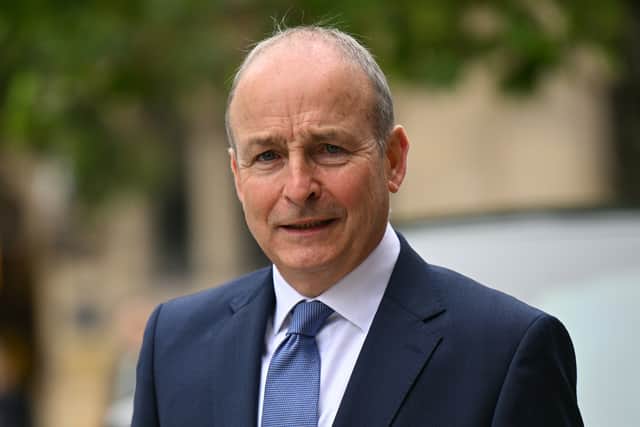
The public sector workers, including nurses, doctors, teachers, and civil servants, entered the national strike after first engaging in work-to-rule action.
As pickets were staged around the country, impacts included the closure of schools, rescheduling of thousands of non-emergency hospital appointments, the cancellation of driving tests and most court hearings.
Speaking to reporters in Brussels on Thursday, Mr Martin said: “We believe in a negotiated pathway to resolve this issue.
“We want a national pay agreement. We have provided substantial funding for that. We want negotiations to commence in respect of that.
“Previous agreements were over two-and-a-half years, three years in the past – so there’s a framework there that we can create.
He added: “I think the most important thing now is for both sides to get into a negotiating process.”
Mr Martin said the Government is “pro-public service” and pointed to provisions for the expansion of the number of public servants in the recent Budget.
He said: “If you look back over the last five years, there’s been a very significant expansion across the public service.
“And that’s important because we have a growing population, we have a growing economy, and that puts strains on public services and pressures on public services.”
He added: “We acknowledge fully the backdrop of very severe cost of living pressures – which is not unique to Ireland, it’s across Europe and the world because of conflict and war.
“We’ve had Covid now. We’ve had the war in Ukraine. We’ve had tariffs, and now we have the war in the Middle East – all of that is affecting the cost of living, and we acknowledge that we know that.”
Labour TD Ged Nash accused Mr Martin and the Minister for Public Expenditure Jack Chambers of taunting public sector workers and questioning their democratic mandate to strike.We all want the Government and the unions to sit down now so we can get into substantive talks, and, importantly, reach an agreement that will mean public sector workers see their increases as quickly as possible, as well as addressing other elements that we will naturally be talking abou
“We must remember there was an overwhelming mandate among public sector workers for the action we saw yesterday. We all need to understand why that action was taken,” he told the Dáil on Thursday.
“We have heard the Minister (Chambers) say in recent days that pay would not be prioritised in the context of any public sector pay talks. He then said that it would be prioritised along with other matters in a meaningless and pointless letter to the Irish Congress of Trade Unions, ICTU, on Monday, in a last-minute effort to try to avert Wednesday’s action.”
Speaking during Leaders’ Questions, Minister for Foreign Affairs Helen McEntee said that 1.2 billion euro was specifically set aside in the budget to allow for the start of talks.
“That is not the complete picture. From previous public sector pay agreements, the last two in particular, we know the final agreement was well above and beyond what the inflation rate was at the time,” the Fine Gael minister added.
“That is the point we want to get to. It requires the Government and the unions sitting down together. I believe that is what the unions want. I believe the goodwill is there on both sides.
“We all want the Government and the unions to sit down now so we can get into substantive talks, and, importantly, reach an agreement that will mean public sector workers see their increases as quickly as possible, as well as addressing other elements that we will naturally be talking about.”
On Wednesday evening, the public expenditure minister said his officials were “absolutely” happy for pay to be the first discussion topic in talks and described 1.2 billion euro which was provided for public service pay in Budget 2027 last week as a “starting point”.